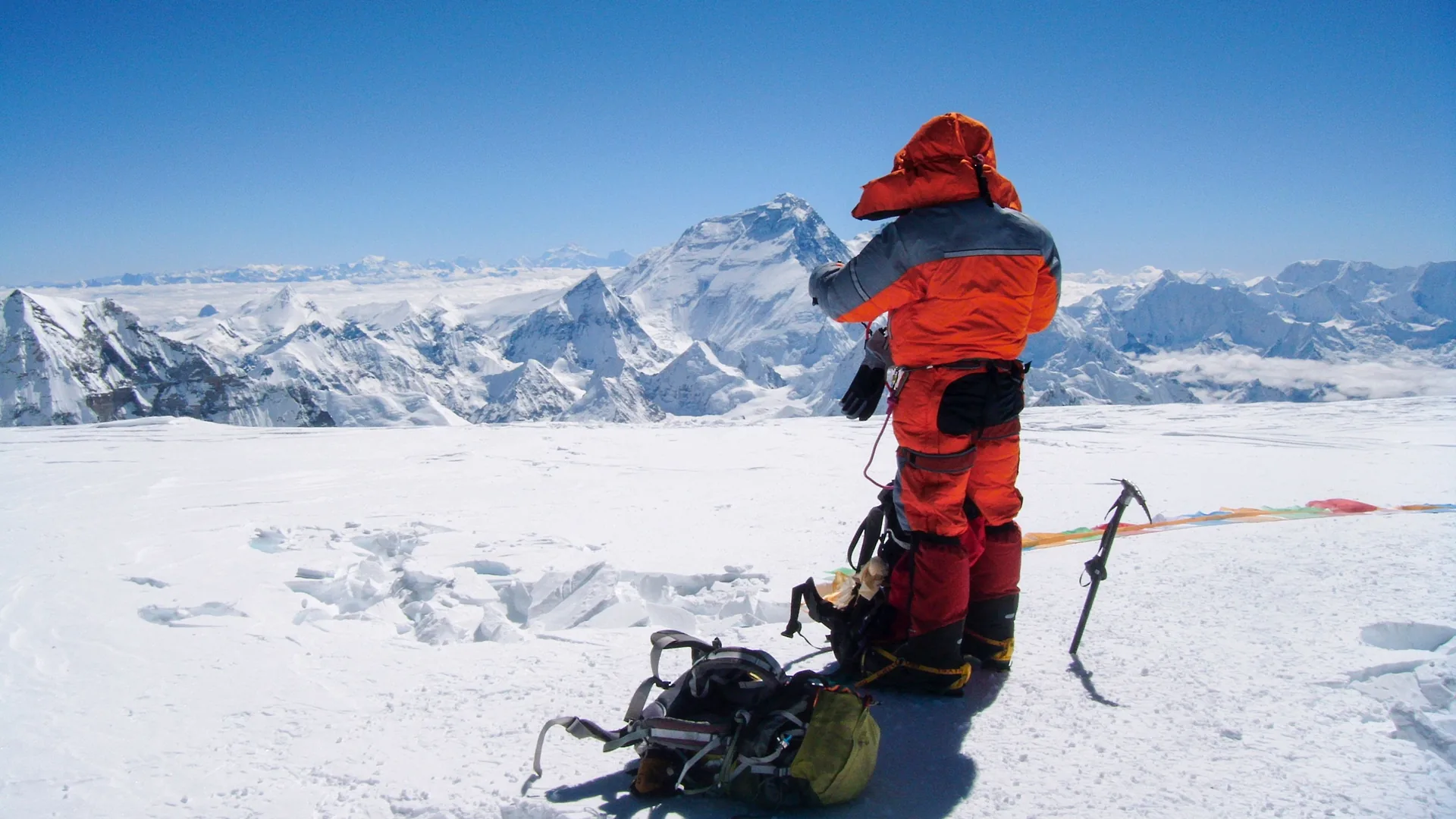
The first time, fear felt like something to defeat. By the third, I'd stopped trying to get rid of it and started listening to what it was actually telling me — which turned out to be the more useful skill.
The first summit: fear as noise
On the first eight-thousander, every gust of wind sounded like a warning. I spent more energy managing panic than managing my pace, and I summited exhausted in a way that had nothing to do with altitude.
The second: fear as information
By the second expedition, I'd learned to separate the fear that meant "this is hard" from the fear that meant "something is actually wrong." The second kind is rare. Most of what feels dangerous at altitude is just discomfort wearing a scarier costume.
At 5,364m, on Kala Patthar, the cold stopped mattering the second the summit caught the first light.
The third: fear as a decision to make peace with
On the third climb, I finally understood that the fear doesn't go away — you just get better at moving alongside it instead of fighting it the whole way up. That shift did more for my summit success rate than any piece of gear ever did.
If you're planning your own first high-altitude trek, start smaller than you think you need to, and read the high-altitude packing list before you buy anything.