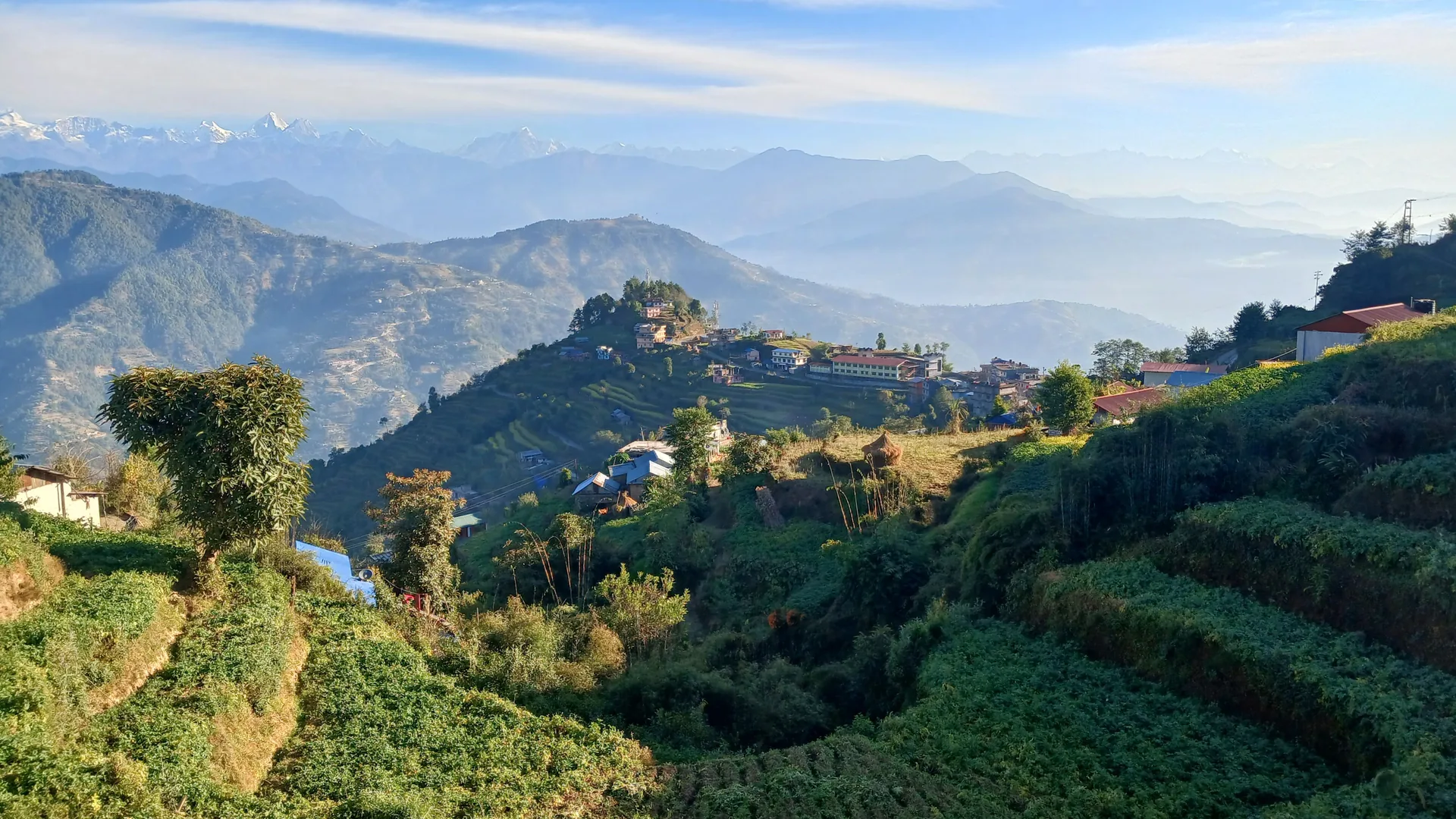
"When's the best time to go?" is the single most common question I get about Nepal, Morocco and Peru, and it's also the question I'm least able to answer in one sentence — because the honest answer is different for each of the three, changes depending on which region of each country you mean, and sometimes flips entirely depending on whether you're headed for the mountains, the coast or the desert. After enough trips to all three to lose count of the exact number, I've settled into a season-by-season way of thinking about each one individually before ever comparing them against each other. That's the order this guide follows: Nepal on its own terms, then Morocco, then Peru, and only after that a direct comparison and the two windows in the year that work reasonably well for all three at once.
Why these three countries don't share a calendar
Nepal's climate is dominated by the South Asian monsoon: a wet season that arrives on a fairly predictable schedule and shapes everything about when the high mountains are visible and passable. Morocco sits on a Mediterranean-to-Saharan gradient, so its "seasons" are really a spectrum from the mild, wet-winter coast to the brutally hot, bone-dry interior, with the High Atlas mountains adding a third, colder layer on top of both. Peru runs on an entirely different logic again — a dry season and a wet season in the Andes that don't line up with calendar seasons the way northern-hemisphere intuition expects, plus a coastal strip around Lima with an inverted microclimate and an Amazon basin that runs on its own rhythm entirely. None of these three calendars are in sync with each other, which is exactly why a single universal answer to "best time to visit" doesn't exist, and why the sections below treat each country as its own system before any comparison is attempted.
Nepal, season by season
Nepal's year splits cleanly into four windows, and the split is driven almost entirely by the monsoon. If you remember nothing else from this section, remember this: the monsoon arrives in June and the mountains disappear behind cloud until it clears in late September, and that single fact governs almost every other piece of seasonal advice for the country.
Spring (March–May)
Spring is Nepal's other prime trekking season, and for good reason. Rhododendron forests bloom spectacularly at mid-elevations in March and April, days are warming up nicely at altitude, and the pre-monsoon haze that builds through April and May is a genuine trade-off against otherwise excellent trekking conditions — mountain views are usually still good in March, get progressively hazier through April, and by late May can be disappointingly milky on hot, humid afternoons, though early mornings still deliver. Lower and mid-altitude treks like Poon Hill and the lower stretches of the Annapurna Circuit are excellent throughout. Everest Base Camp and Annapurna Base Camp are both very doable, just book lodges a little ahead since spring is nearly as busy as autumn on the headline routes.
Monsoon (June–August)
This is the season almost everyone is told to avoid, and for the classic Everest and Annapurna routes, that advice is basically correct: near-daily rain, leech-infested lower trails, a real landslide and road-washout risk on the drives in and out of trailheads, and mountain views that are more often cloud than peak. What doesn't get said often enough is that a handful of regions sit in the Himalaya's rain shadow and stay genuinely good through monsoon — Upper Mustang and Dolpo in particular receive a fraction of the rainfall the rest of the country gets, because the Annapurna and Dhaulagiri massifs block most of the moisture before it reaches them. If a Nepal trip is only possible in July or August, these rain-shadow treks are the move, not a rain-soaked attempt at Everest Base Camp. Monsoon season does also bring genuinely cheap flights and empty lodges everywhere else, if you're flexible about the itinerary and comfortable with the trade-offs.
Autumn (September–November)
This is Nepal's undisputed prime season and the one almost every trekking photo you've seen of the country was taken in. The monsoon clears through September, leaving the air unusually clean and the mountain views as sharp as they get all year, skies are reliably stable through October and into November, and this window overlaps with Dashain and Tihar, Nepal's two biggest festivals, which adds genuine cultural texture to a trip on top of the trekking. The trade-off is exactly what you'd expect: Everest Base Camp and the Annapurna Circuit are at their busiest, teahouses on the popular routes fill up and should be booked ahead where possible, and domestic flights to trekking gateway towns like Lukla sell out weeks in advance during the peak two or three weeks of October.
Winter (December–February)
Winter is cold, especially at altitude — high passes above 5,000m can close entirely after heavy snow, and multi-week treks that depend on crossing a high pass become genuinely risky or simply impossible without specialist winter gear and experience. But the air is often exceptionally clear on cold, clear days, lower-elevation treks like Poon Hill, Ghorepani and the lower Annapurna foothills remain very doable and are noticeably quieter than in autumn, and this is by far the cheapest and least crowded time to be in the country if the itinerary is built around lower elevations rather than a high-pass crossing.
Morocco, season by season
Morocco's seasonal logic is less about a single wet/dry split and more about a gradient: the Atlantic coast, the interior cities, the High Atlas mountains and the Sahara can all be experiencing genuinely different weather on the same day, sometimes a temperature swing of 15–20°C between the coast and the desert. Picking a season means picking which part of that gradient the trip actually prioritizes.
Spring (March–May)
This is Morocco's best all-round window and the one I recommend by default when someone hasn't already committed to a specific region. Wildflowers carpet parts of the High Atlas in April, Sahara daytime temperatures are comfortable rather than punishing, Marrakech and Fez sit in a genuinely pleasant range for walking cities on foot all day, and this is before the true summer heat sets in across the interior. The only real downside is that it overlaps with Europe's own spring travel season, so popular riads and desert camps around Easter week specifically should be booked well ahead.
Summer (June–August)
Summer in Marrakech, Fez and the Sahara is genuinely brutal — daytime highs regularly clear 40°C in the interior and desert through July and August, and exploring a medina on foot at 2pm in August is a miserable, occasionally unsafe experience without serious heat precautions. The Atlantic coast is the exception: Essaouira and Agadir stay noticeably cooler thanks to ocean breezes and are Morocco's best summer destinations by a wide margin. The High Atlas mountains also offer real relief from the heat purely through altitude — Toubkal treks are doable and comfortable in summer specifically because the elevation counteracts the season, which is the reverse of how altitude works in Nepal. If summer is the only window available, I'd build the trip around the coast and the mountains and treat the desert and interior cities as short, early-morning-only stops rather than a multi-day base.
Autumn (September–November)
Autumn is Morocco's second prime season, mirroring spring in most respects: the punishing summer heat has broken by late September, days stay warm and pleasant into November, nights in the desert cool down noticeably but not uncomfortably, and this window also catches the date harvest in the southern oases, which adds an unexpected layer to a Sahara-region trip if the timing lines up. Crowds and prices sit between spring's peak and winter's quiet, making autumn a reasonable pick for anyone trying to split the difference between good weather and lower costs.
Winter (December–February)
Winter days in Marrakech and along the coast are mild and genuinely pleasant for sightseeing, but Sahara desert nights drop close to freezing — a fact that surprises a lot of first-time visitors who pack for "desert = hot" and end up cold in a tent at 3am. The High Atlas gets real snow, enough that Oukaimeden, Morocco's own ski resort, operates a functioning winter season. Winter is Morocco's quietest and cheapest window for the cities and coast, and a genuinely good choice for anyone prioritizing budget and low crowds over desert camping comfort — just pack for both a mild city day and a cold desert night if the itinerary includes the Sahara.
Peru, season by season
Peru is where "best time to visit" gets most counter-intuitive for first-time visitors, mainly because the Andes, the coast and the Amazon each run on a different — and in the coast's case, inverted — seasonal logic, all inside one country.
Dry season in the Andes (May–September)
This is the conventional "best time" answer for Peru, and for the Cusco region, Machu Picchu and the Inca Trail specifically, it's correct: skies are reliably clear, rain is rare, and trekking and sightseeing conditions in the Sacred Valley are about as good as they get. The trade-offs are real, though — June and July nights at altitude in Cusco and along the Inca Trail get genuinely cold, this is by far the busiest and most expensive window, and Inca Trail permits (which are capped at a fixed daily number) routinely sell out four to six months ahead for the peak weeks of June through August. If an Inca Trail permit is a non-negotiable part of the trip, this is the one piece of Peru planning where booking far earlier than feels necessary is the difference between getting a spot and not.
Wet season in the Andes (October–April)
The wet season gets an unfairly bad reputation. Rain in the Sacred Valley is typically concentrated in afternoon showers rather than all-day washouts for much of the season, landscapes turn genuinely green and photogenic in a way the dry season never achieves, crowds thin out noticeably at Machu Picchu and along alternative treks, and prices drop. The one hard exception: the classic Inca Trail closes entirely every February for annual maintenance, no exceptions, so anyone set on that specific trek needs to plan around it — the alternative treks (Salkantay, Lares) generally stay open and are a genuinely good wet-season substitute.
Coastal Peru: Lima's inverted microclimate
This is the detail that catches almost every first-time visitor off guard: while the Andes are in their "dry season" from May to November, Lima and the coast are experiencing garúa — a persistent, grey, overcast dampness with rare direct sun, despite technically being Peru's dry months. The coast's genuinely warm, sunny season runs the opposite direction, roughly December through April, exactly when the Andes are wettest. A trip built around "Peru's dry season is best" without accounting for this inversion can land a visitor in a grey, sunless Lima bookended by a gloriously clear Sacred Valley — which is a fine trip, just not the sun-drenched coastal experience some visitors expect from a "dry season" trip.
The Amazon basin: another inversion
The Peruvian Amazon runs on yet another pattern, roughly inverted again relative to the Andes: December through March is the high-water season, when rivers rise and flood the forest floor, making boat-based lodge access easier and canopy-level wildlife viewing better from the water. June through September is the low-water season, when more forest floor is exposed and walking-based wildlife trekking becomes the better way to explore. Neither season is objectively better for an Amazon extension — it genuinely depends on whether the trip favors boat-based or trail-based exploration — but it's worth knowing that "Peru's dry season" (good for the Andes) is specifically the Amazon's low-water, trail-based season, not a universal "dry" that applies the same way everywhere in the country.
The factor that isn't a season at all: Ramadan in Morocco
Morocco has one major seasonal wrinkle that has nothing to do with temperature: Ramadan, which shifts roughly eleven days earlier each year on the Gregorian calendar and can fall in any of the seasons described above. During Ramadan, many restaurants outside tourist hubs close during daylight hours, some riads and guides adjust their schedules around the pre-dawn and post-sunset meals, and the overall daytime pace in smaller towns slows down noticeably, while evenings — especially the iftar meal after sunset — come alive in a way that's genuinely worth experiencing if the timing lines up. None of this makes Ramadan a bad time to visit Morocco; tourist-facing restaurants in Marrakech, Fez and the main riads generally operate normally, and I've had some of my best Morocco evenings during Ramadan specifically because of the post-sunset energy. It's simply a factor worth checking against the specific travel dates independently of the seasonal weather planning above, since it can meaningfully change the daytime experience in smaller towns regardless of which of the four weather seasons it happens to fall in that year.
How the seasons affect the specific bucket-list moments
Beyond general weather, each country has one or two specific, photographable moments that first-time visitors build the whole trip around, and season affects these more sharply than it affects the trip overall. A clear sunrise view of Everest from Kala Patthar is meaningfully more likely in the stable, dry air of October and November than in the hazier pre-monsoon stretch of late April and May, even though both are technically good trekking windows. Sahara stargazing in Morocco depends on clear, dry desert air that's actually more reliable in winter than in the hazier, dustier summer months, which is a rare case of Morocco's least popular season quietly outperforming its most popular ones for one specific activity. And a clear, unobstructed sunrise over Machu Picchu is closer to a coin flip in the wet season's cloud cover than the dry season's more reliable clear mornings, which is worth weighing seriously if that single photo is a genuine priority for the trip rather than a nice-to-have — it's one of the few places in this whole guide where I'd let one specific bucket-list moment outweigh every other seasonal trade-off already discussed.
Side-by-side comparison
Putting all three countries on the same table makes the trade-offs easier to see at a glance. "Prime window" below means the single best stretch for most travelers' priorities in that country; "avoid" flags the window with the steepest trade-offs for a first-time visitor.
| Country | Prime window | Good shoulder option | Generally avoid | Why |
|---|---|---|---|---|
| Nepal | Late Sept – Nov | March – early May | June – Aug (except rain-shadow treks) | Monsoon hides the mountains; autumn has the clearest, most stable skies. |
| Morocco | Mar – May | Sept – Nov | Jul – Aug in the interior/desert | Interior and Sahara heat becomes punishing in summer; coast and High Atlas are the summer exceptions. |
| Peru (Andes) | May – Sept | Apr or Oct – Nov | February on the classic Inca Trail (closed) | Dry season gives reliable Sacred Valley weather, but books out early and runs cold at night. |
The two windows that work reasonably well for all three
If a single trip — or a single year of travel split across visits — needs to touch all three countries, two windows come closest to giving every leg a reasonable deal rather than a great deal for one country at the expense of the others. Late April into early May lands after Nepal's spring haze has often not yet peaked, inside Morocco's genuinely excellent spring window, and right at the edge of Peru's Andean dry season beginning, with the coast still in its own damp stretch. Late September into October is the stronger of the two: it's the very start of Nepal's premier autumn window, still comfortably inside Morocco's good autumn stretch, and solidly within Peru's dry season for the Andes, albeit with Lima's coast still grey. Neither window is perfect for all three simultaneously — that calendar doesn't exist — but both avoid stacking a bad trade-off in more than one country at once, which is the realistic goal for anyone planning a multi-country year rather than three fully separate, individually optimized trips.
Booking timelines: what actually needs to be booked early
Seasonal timing and booking timelines are related but different questions, and conflating them is a common planning mistake. In Nepal, autumn's popularity means Lukla flights and the most popular Everest Base Camp and Annapurna teahouses are worth booking or at least confirming a few weeks ahead during the peak two or three weeks of October, though most of the country doesn't require anything like Peru's lead times. In Morocco, spring around the Easter school-holiday period and any Sahara camp around major European or Moroccan holidays deserve advance booking, but most of the country can be booked with a few weeks' notice outside those specific windows. Peru is the clear outlier: the classic Inca Trail's fixed daily permit cap means booking four to six months ahead for June-through-August departures is genuinely necessary, not just advisable, and even shoulder-season Inca Trail dates benefit from two to three months' lead time — a mismatch between "when to go" and "when to book" that catches more first-time Peru visitors than any other single planning detail on this list.
Packing implications by season
Season doesn't just change what you'll see, it changes what belongs in the bag, and the three countries diverge here almost as much as they do on weather. A Nepal autumn trek needs proper layering for genuinely cold mornings and nights at altitude even though days can be pleasant, while a Nepal monsoon trip in the rain-shadow regions needs quick-dry layers and real attention to footwear traction on wet trail sections. Morocco's spring and autumn windows need surprisingly little beyond sun protection and a light layer for cool desert evenings, but a winter Sahara trip needs a genuine warm layer for near-freezing overnight temperatures that a "hot desert country" assumption easily misses. Peru's dry-season Andes trips need serious warmth for cold nights at altitude despite pleasant days, while a wet-season Andes trip trades some of that cold-night gear for real rain protection instead. A reliable, packable rain shell earns its spot in the bag on more of these trips than any other single item — I've relied on the same lightweight option (a compact packable rain shell like this one) across a Nepal monsoon trip, a wet-season Andes trek and more than one "it wasn't supposed to rain" Moroccan afternoon. The full high-altitude packing list and the general travel gear guide both go deeper on specifics for the colder, higher-altitude legs of any of these three trips.
Insurance and risk, by season
The seasonal trade-offs above translate into real, different risk profiles that are worth naming explicitly rather than leaving implicit. Nepal's monsoon season carries a genuinely elevated risk of flight delays and cancellations into mountain airstrips, plus a real landslide risk on some access roads, both of which are exactly the kind of disruption a solid travel insurance policy is meant to cover. Morocco's summer interior heat carries a real heat-illness risk that's worth having health coverage in place for regardless of how careful the itinerary is about avoiding the worst of the midday sun. Peru's dry-season cold nights at altitude and its wet-season trail conditions both carry their own distinct risk profiles, and a policy that explicitly covers trekking and altitude-related activity is worth confirming before booking a wet-season trek on the assumption that "it's not officially trekking season, so a standard policy is fine." The full travel insurance guide covers how to actually compare policies against a specific trip's real risk profile rather than its marketing copy.
Frequently asked questions
Is there ever a genuinely bad time to visit all three countries? The closest thing to a universally bad window is late June through August: it's deep monsoon in Nepal (except the rain-shadow regions), peak brutal heat in interior and southern Morocco, and — while it's technically Peru's dry season — the coldest, most crowded and most expensive stretch for the Andes. None of these are disqualifying on their own, but stacking all three in one round-the-world summer trip means accepting the steepest trade-off in every leg at once.
Which of the three is most forgiving if I can only travel during a fixed work holiday window? Morocco, by a clear margin — its coast and High Atlas mountains offer a genuinely good option in every single month of the year, which isn't true of Nepal's mountain regions or Peru's Andes, both of which have real dead zones for their headline activities.
Does "shoulder season" mean the same trade-off in all three countries? No. Nepal's shoulder season (spring) trades some visibility for good conditions; Morocco's shoulder seasons (spring and autumn) are close to its best conditions overall with only a mild trade-off; Peru's shoulder months trade some Andean weather reliability for lower prices, thinner crowds and, on the coast, actually better weather than the technical dry season delivers.
If I can only pick one country this year based purely on weather odds, how should I decide? Match the calendar window you actually have against the "prime window" column in the comparison table above rather than picking the country first and forcing the dates — a Nepal trip forced into July or a Peru Andes trip forced into February will both under-deliver relative to what either country offers in its own best season.
The takeaway
None of these three countries has a single "best time to visit" that applies everywhere within it, and treating them as if they share one calendar is the fastest way to plan a trip around the wrong month. Nepal's answer is driven almost entirely by the monsoon; Morocco's is a gradient from coast to desert that shifts which region is "best" through the year rather than closing any single month off entirely; Peru's is genuinely inverted between the Andes, the coast and the Amazon, in a way that trips up more first-time visitors than any other seasonal detail in this guide. Treat each country on its own terms first, use the comparison table to sanity-check the trade-offs, and if the itinerary needs to touch more than one of them, aim for late April or, better, late September into October — the two stretches of the year where none of the three is asking you to accept its worst month.